Trimming Waste
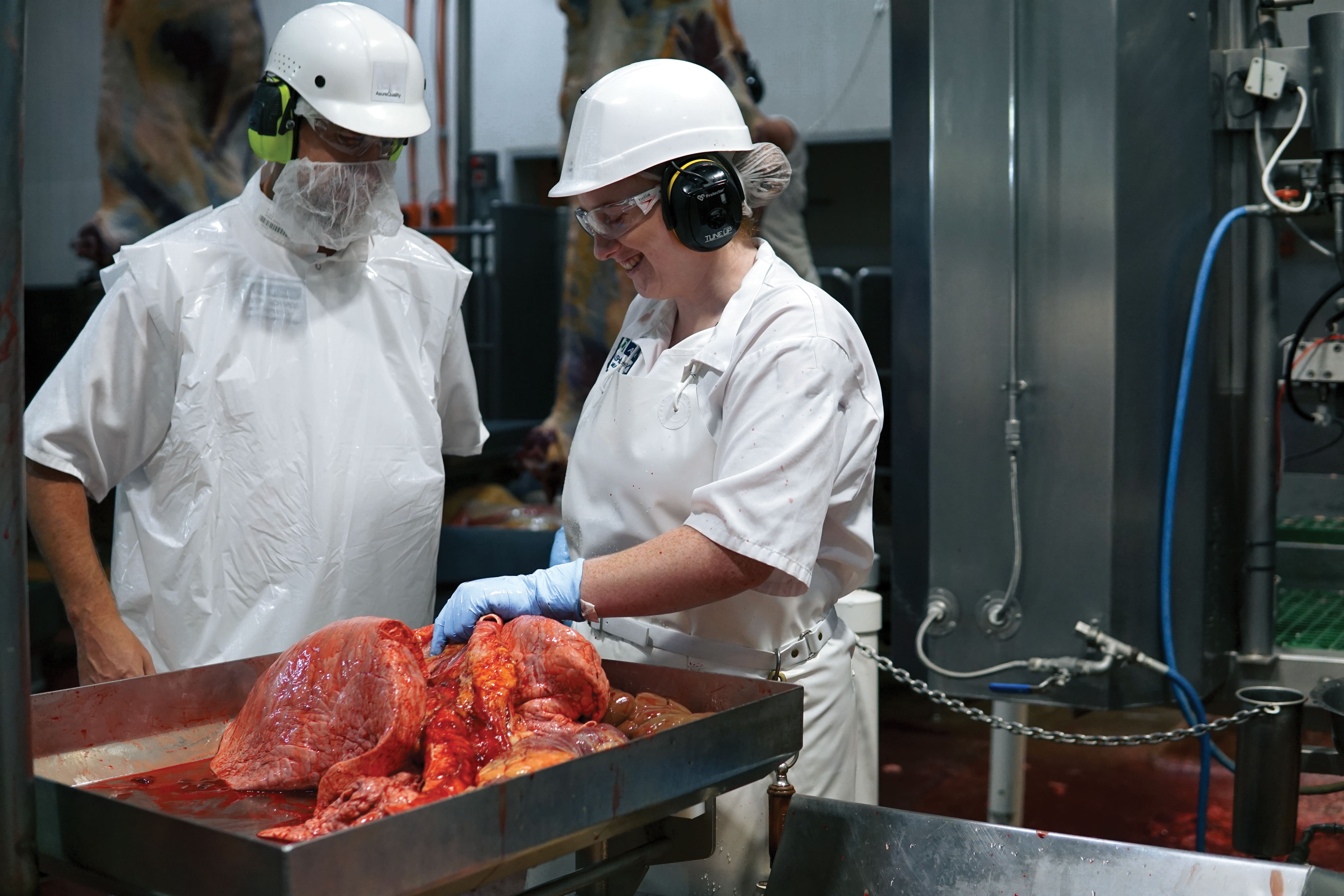
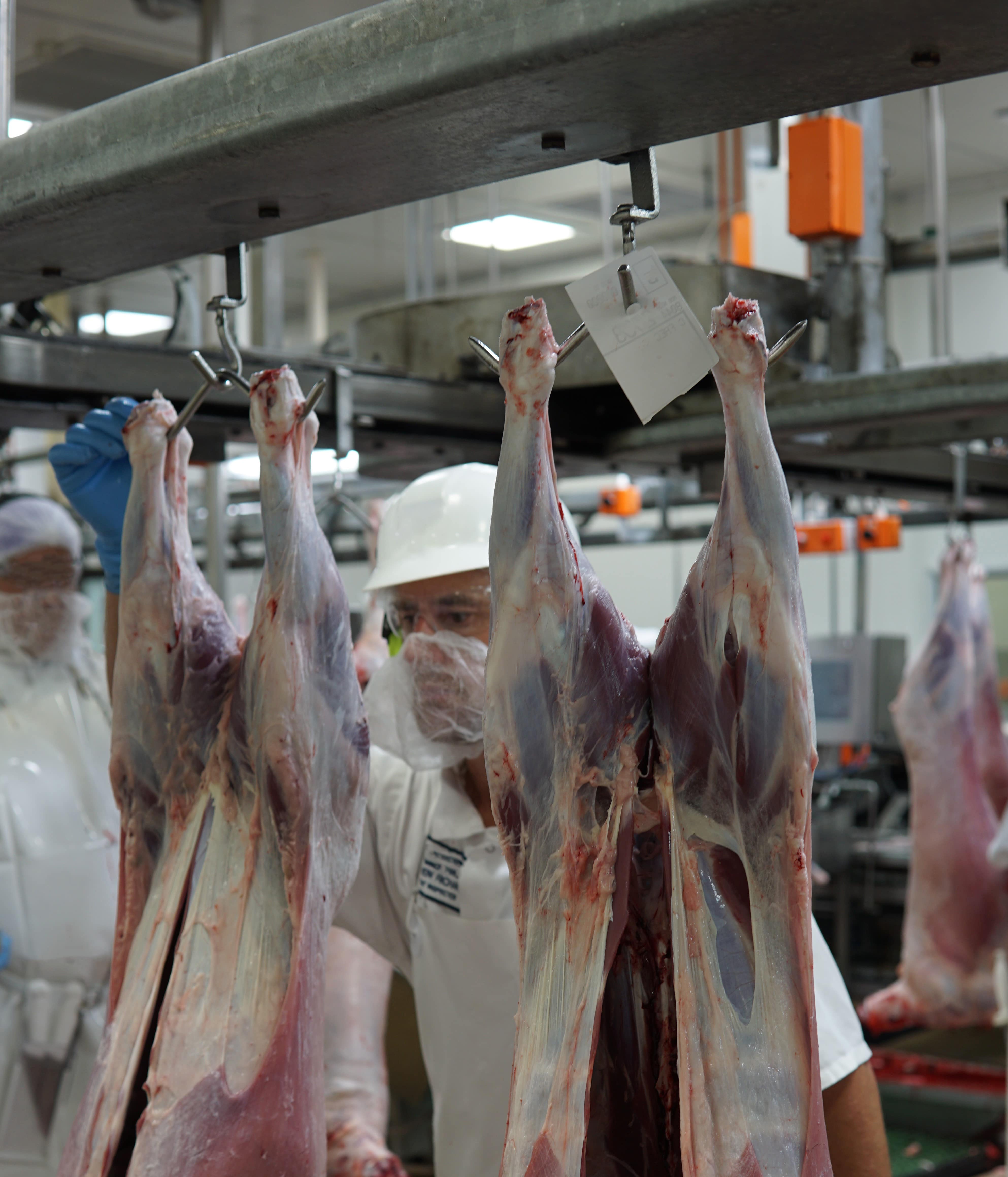
Animal carcasses with disease are diverted off the killing chain, sectioned, and further examined and reclassified. Carcasses meeting specific standards have localised infections removed. Workers in this part of the killing chain often follow the skin surgeon’s rule: "if in doubt, cut it out."
While a generously broad knife strokes minimise the risk of tainted meat ending up where it shouldn’t, too much good meat ends up on the cutting floor. It’s a big problem – and an awful waste – when you consider that some plants process over one million lambs a season. With a bit more training, AI will help fix that, Mr Scott said.
Animal carcasses with disease are diverted off the killing chain, sectioned, and further examined and reclassified. Carcasses meeting specific standards have localised infections removed. Workers in this part of the killing chain often follow the skin surgeon’s rule: "if in doubt, cut it out." While generously broad knife strokes minimise the risk of tainted meat ending up where it shouldn’t, too much good meat ends up on the cutting floor. It’s a big problem – and an awful waste – when you consider that some plants process over one million lambs a season. With a bit more training, AI will fix that, Mr Scott said.
“Sometimes way more is cut off than is necessary, so AI could provide a trimming guide that shows exactly which areas need to be removed, how deep and wide slaughtermen need to cut, and that – actually – you don’t need to remove the entire rib cage,” he said. “A 1kg rack of lamb retails for over $50, so improved cutting accuracy will make a real difference to farmer yields.”
Mr Scott envisages a future where abattoir workers will use augmented reality headsets to overlay cutting lines on the infected parts of animals. The tech combo could also assess the cutting handiwork of workers, scoring their accuracy, offering a powerful training aid.
But it’s not processors and farmers who are rubbing their hands together at the prospect of AI in the abattoir. “There’s a very low incidence of disease in New Zealand and some people struggle to see the value in what AsureQuality does,” Mr Scott said. “It’s easy to view us as a bit like insurance – a grudge purchase, a kind of red tape on exports,” Mr Scott said.
Emerging Possibilities

Faecal contamination is more likely than disease to endanger export orders. Tiny traces can turn around a fully laden container and put the country on a blacklist for months. Inspectors rarely miss the signs, but AI could add another set off eyes to further reduce risks. Incorporating alerts will help inspectors catch any contaminants early and pinpoint necessary changes on the killing chain. The organisation will also train the model to detect upwards of 10 other disease states.

.svg)











-p-500.png)